Vatnajokull Ice Caves Location — Which Glaciers
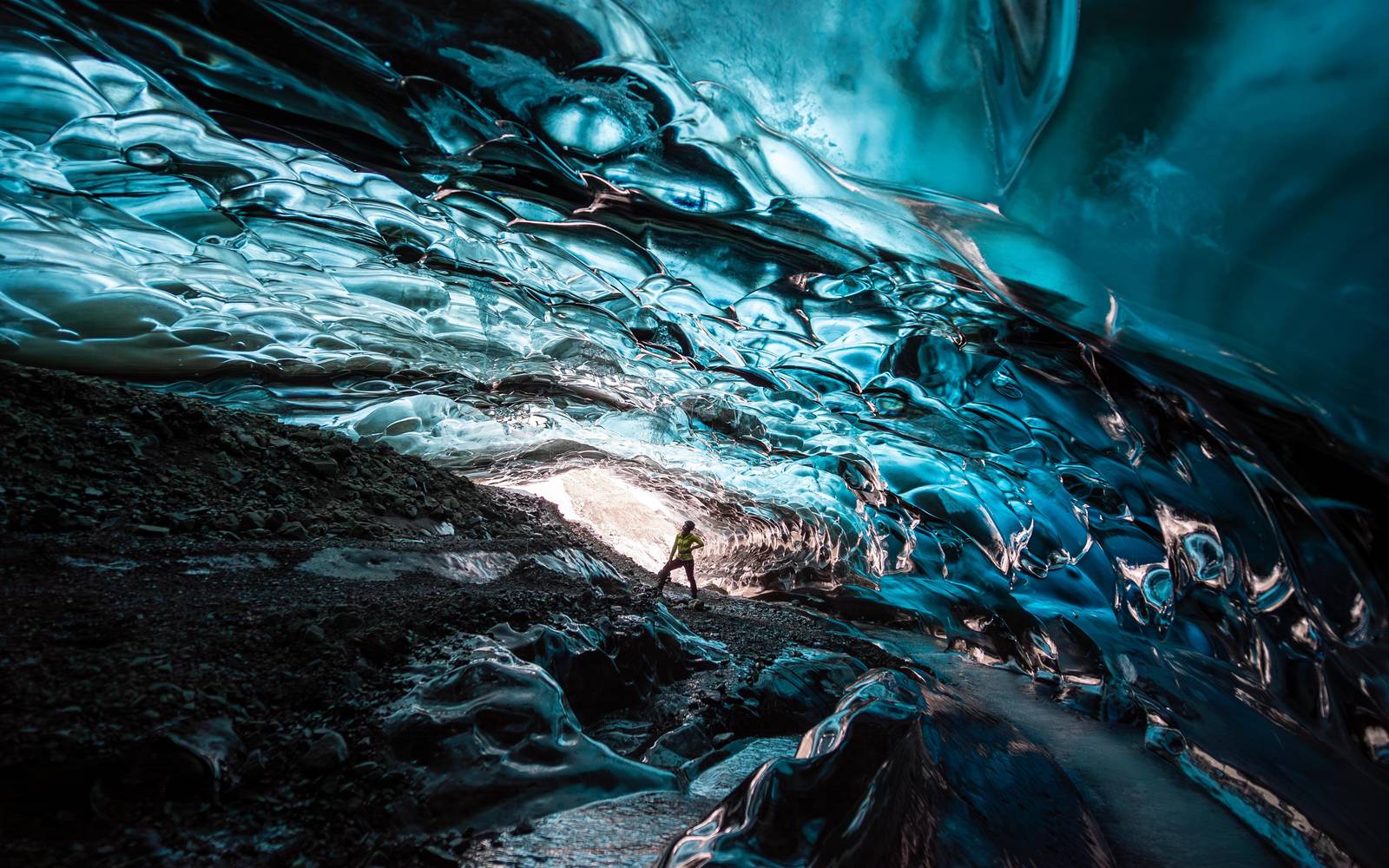
The caves lie at the snouts of Vatnajökull's outlet glaciers on the south coast, mainly Breiðamerkurjökull — on both sides of Jökulsárlón lagoon — and Falljökull and Virkisjökull near Skaftafell. These are the glaciers named in the national park's contracts with ice cave operators for 2024–2027.
- Where
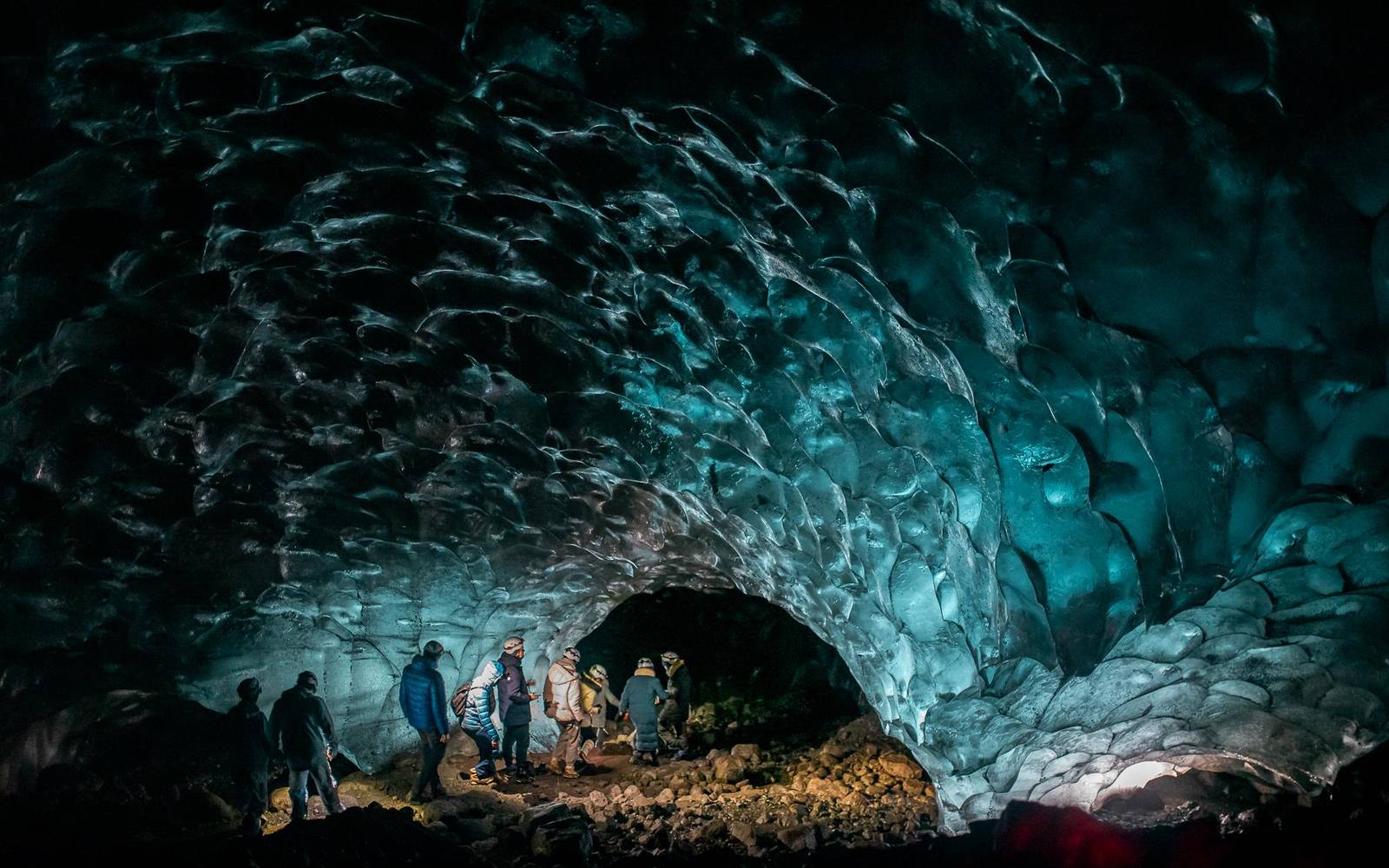
- both sides of Jökulsárlón lagoon
- Way in
- by super jeep from Jökulsárlón, 20–40 min off-road
- Tours
- the “Crystal Ice Cave” tours
- Where
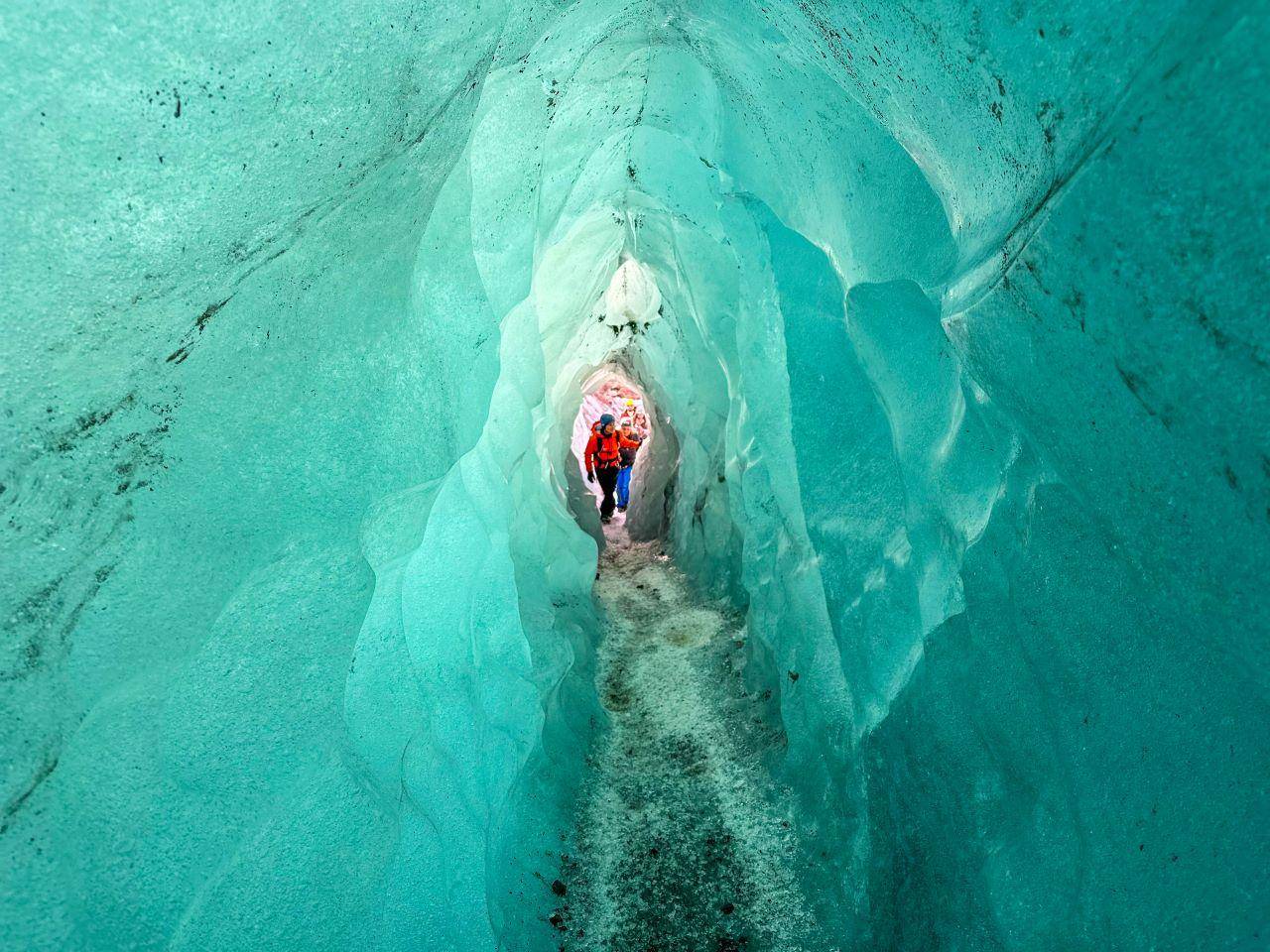
- near Skaftafell
- Way in
- from Skaftafell or Hof, by bus and on foot
- Tours
- hike-and-cave tours
A cave is a meltwater channel inside the ice, so it exists for a season and then melts. Every autumn guides go out to find the new caves, and the guide chooses the safest one on the day. Listings name caves by season — "Sapphire" and "Bellissimo" on the Ice Pic Journeys tours, an "Eastern or Western" cave on another — but none gives a location, and none should.
Crystal Ice Cave, Vatnajökull — Breiðamerkurjökull
"Crystal Ice Cave" is the name given to the most popular cave of recent seasons, after the clearness of its ice. The tours that use the name all start at Jökulsárlón, and the two that name a glacier go to Breiðamerkurjökull, the outlet that feeds the lagoon.
Vatnajokull Ice Caves Map — the Four Meeting Points
A map of the Vatnajokull ice caves can only show where tours meet, not the caves: their positions change every winter and are not published. The four meeting points lie along Route 1 over about 56 km, from Skaftafell in the west to Jökulsárlón in the east.
- 1Skaftafell basesArctic Adventures and Icelandiapark parking fee
- 2Troll base, Hofthe Skaftafell hike and ice cavefree parking
- 3Fjallsárlónthe premium ice cave tourFROST restaurant
- 4Jökulsárlón car parkten super jeep tours and the long hikespark parking fee
Coordinates are the meeting-point pins on each GetYourGuide listing, rounded. Each operator has its own spot inside the Jökulsárlón car park — by the café, the ticket office or the toilets — so check your booking for the exact one.
Which point for which tour
Source · GetYourGuide product pages (meeting-point pins), November 2026
Getting to the Vatnajokull Ice Caves Location
You drive Route 1, the Ring Road, east from Reykjavík: about 327 km to Skaftafell, roughly 4.5 hours, and about 370–390 km to Jökulsárlón, roughly 5 hours. Without a car, the practical option is a 2- to 4-day tour from Reykjavík that includes the cave.
- Reykjavíkstart
- Skaftafell327 kmabout 4.5 h
- Jökulsárlón370–390 kmabout 5 h
- Höfn+ about 80 kmnearest town east
Where to sleep
The closest towns are Kirkjubæjarklaustur to the west of Skaftafell and Höfn to the east, about 80 km beyond Jökulsárlón. Sleep near the meeting point of your tour: most operators ask you to arrive 15–30 minutes before the start.
Parking and fees
Vatnajökull National Park charges a regional parking fee at its two busiest areas, collected by number-plate camera or at the machines.
In December the southeast has about 4 hours of daylight. Check road.is and the Icelandic Met Office on the morning you drive; sections of the road can close in storms, and operators may cancel tours when the park judges conditions unsafe.
Vatnajokull Ice Caves Facts
Vatnajökull is the largest glacier in Iceland and the largest in Europe by volume, and its national park is a UNESCO World Heritage Site. The caves are a small, seasonal part of it: they form in the outlet glaciers at its edge, last one winter, and drew about 195,000 visitors in the 2023–24 season.
- Thickness
- about 400 m on average
- Highest point
- Hvannadalshnúkur, 2,110 m
- Outlet glaciers
- about 30
- Founded
- 2008
- UNESCO World Heritage
- 2019
- Listed for
- volcanoes and ice, jökulhlaup floods
- Season
- about November to March
- Operators run
- October to the second half of April
- Safety
- every cave assessed daily since autumn 2024
The park
Vatnajökull National Park was founded on June 2008 and covers about 14% of Iceland. UNESCO inscribed it on July 2019 for the interaction of volcanoes and ice, including the jökulhlaup floods that follow subglacial eruptions.
Source · Visit South Iceland; Vatnajökull National Park; UNESCO; RÚV; checked November 2026
See them for yourselfCompare ice cave tours from Jökulsárlón →How the Ice Caves Form — and Why They Move
The caves are made by water: in summer, meltwater runs through and under the glacier and carves channels; as autumn cold slows the flow, the channels empty and the ice hardens enough to enter. By spring the melt starts again and the cave is lost, so next winter's caves are somewhere else.
- Summermeltwater carves the channels
- Autumnthe flow drops; guides scout the new caves
- Wintercaves are open to tours
- Springmelt resumes; tours end by late April
Next winter the cave is somewhere else.
What operators say
Ice Pic Journeys describes its Sapphire cave as a feature formed in the summer months as the glacier melts, which becomes accessible as the water flow drops in winter. Icelandia explains that passages form as meltwater finds its way through the glacier. Ice Explorers adds that its caves may sit at the glacier edge or require a 500–1,000 m walk onto the ice.
Glacier ice looks blue because dense ice absorbs red light and lets blue through; the thicker and clearer the ice, the deeper the blue (USGS). Snow on the roof, cloud and meltwater all change the light in the cave from day to day.
Can You Visit Ice Caves in Iceland on Your Own?
No — not safely, and not in Vatnajökull National Park, where only operators with a park contract take groups into the caves. Visit Vatnajökull says the caves should never be entered without a glacier guide and safety gear; the 2024 collapse on Breiðamerkurjökull happened on a guided tour, which shows the risk even with guides.
- Icebergs on Jökulsárlón from the car park
- Ice on the black sand of Diamond Beach
- Outlet glaciers from Skaftafell and Fjallsárlón, at a distance
- Crevasses and moulins hidden holes on the way in
- Collapse caves change daily; unsafe ones are closed
- Gear helmets and crampons on every tour
What you can see without a tour
From the Jökulsárlón car park you see icebergs on the lagoon and, across the road, ice on the black sand of Diamond Beach. From Skaftafell and Fjallsárlón you see outlet glaciers from a distance. None of these takes you into a cave.
Vatnajokull Ice Caves Location Questions
Where is the ice cave in Iceland?
Most visitors mean the Vatnajökull caves in the southeast, at Breiðamerkurjökull near Jökulsárlón and Falljökull near Skaftafell, open in winter. Iceland also has the Katla cave near Vík, open all year, the man-made Into the Glacier tunnel on Langjökull, and an indoor ice cave at Perlan in Reykjavík. Vatnajökull and Katla compared.
Why are ice caves blue?
Because dense glacier ice absorbs the red part of daylight and lets the blue pass and scatter, so the thicker and more bubble-free the ice, the bluer it looks. Snow on the cave roof or cloud can make the same cave look white or pale on another day.
Can I find the cave coordinates online?
No, and you shouldn't need them: caves change every winter and are entered only with a guide. What you need are the meeting-point coordinates, which are on each GetYourGuide listing and on the map on this page.
How far is Jökulsárlón from Skaftafell?
About 56 km on Route 1, under an hour by car. Fjallsárlón is about 10 km west of Jökulsárlón, and Troll's base at Hof lies between Skaftafell and Fjallsárlón.
Is the Vatnajökull ice cave inside the national park?
Yes. Breiðamerkurjökull, Falljökull and Jökulsárlón are all part of Vatnajökull National Park, and cave tours there operate under park contracts and the park's season and safety rules.
Is Diamond Beach near the ice caves?
Yes, it is across Route 1 from the Jökulsárlón car park where most super jeep tours start. Ice from the lagoon washes up on the black sand, and the beach is free to walk.
Where Our Location Facts Come From
- Vatnajökull National Park — operator contracts, parking fees
- Visit South Iceland, UNESCO — glacier and park facts
- Visit Vatnajökull — Crystal Ice Cave, guide rule, season
- GetYourGuide listings — meeting points, cave descriptions
- RÚV, Iceland Review — visitor numbers, the 2024 accident, safety rules
- USGS — why glacier ice is blue